When applying for a UK visit visa, you might assume that the decision will largely depend on whether you have provided all the required documents. While supporting documents are important, there is more to the process than simply submitting paperwork.
This is where the genuine visitor test comes in.
When considering your application, a caseworker will look at whether you genuinely intend to visit the UK for the reasons you have given. They will consider your personal circumstances, the purpose of your visit and the evidence you have provided to support your application.
But what does the genuine visitor test actually involve? And what are UK caseworkers looking for when deciding whether to approve or refuse a visit visa?
What is the Genuine Visitor Requirement?
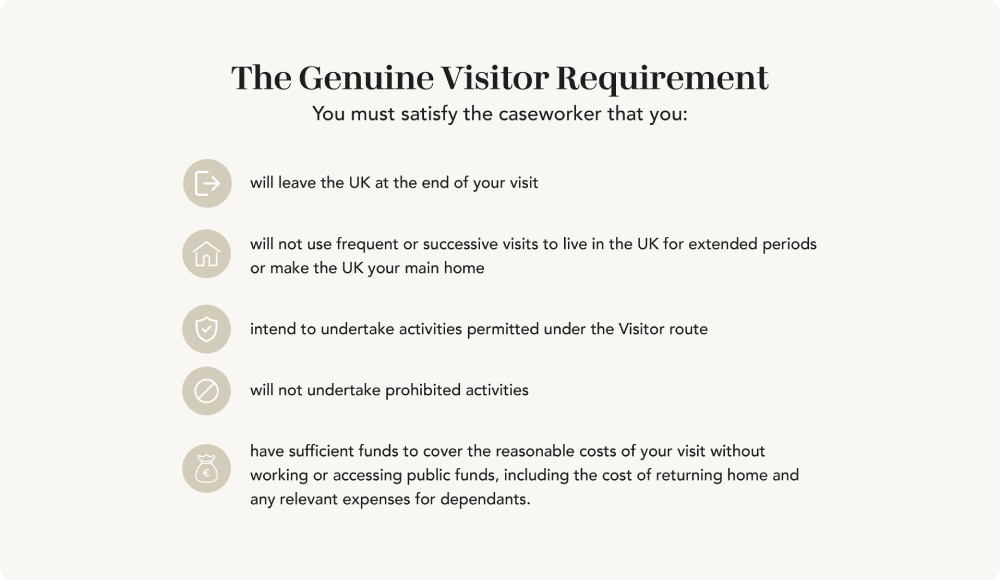
You must satisfy the caseworker that you:
- will leave the UK at the end of your visit,
- will not use frequent or successive visits to live in the UK for extended periods or make the UK your main home,
- intend to undertake activities permitted under the Visitor route,
- will not undertake prohibited activities,
- have sufficient funds to cover the reasonable costs of your visit without working or accessing public funds, including the cost of returning home and any relevant expenses for dependants.
All these requirements are interconnected, but each one must be satisfied separately. For example, if you have a genuine reason to visit your relative and would leave within one month, that does not automatically establish that every other requirement has been met.
The caseworker must be satisfied that all the relevant requirements are met before granting the visa.
Will You Leave the UK at the End of Your Visit?
You need to explain why you want to visit the UK, why you intend to return home afterwards, and how the visit fits around your existing commitments.
When assessing this, the caseworker will look at your plans alongside your personal, family, social and financial circumstances. They will consider whether the reason for your visit makes sense in light of your circumstances and whether you have genuine reasons to return home.
Evidence of your employment, business, property ownership, studies, family responsibilities or other commitments can help demonstrate that your visit is temporary and that you intend to leave the UK at the end of your stay.
Are You Genuinely Visiting for a Permitted Purpose?
You may want to travel to the UK. But that itself is not enough. You must intend to undertake an activity that is permitted under the Visitor route.
Common intended purposes include tourism, visiting family or friends, attending certain business meetings or transactions, and other activities specified in the rules.
Therefore, you must identify the main purpose of your visit and ensure that they fall within the permitted rules.
Which Activities Are Prohibited Under the Visitor Route?
A UK visit visa does not give you permission to work or carry out any activity you wish while in the UK.
Some activities are specifically prohibited under the Visitor Rules. These include taking up employment, setting up or running a business, undertaking work placements and directly selling goods or services to members of the public in the UK.
Whether an activity is permitted will depend on what you intend to do, the nature of the activity and the specific conditions set out in the Visitor Rules.
If you are unsure whether your planned activities are allowed, it is important to check the relevant rules before submitting your application.
Do You Have Sufficient Funds for Your Visit?
You must be able to show that you have enough money to cover the costs of your visit without needing to work in the UK or rely on public funds.
These costs may include your flights, accommodation, day-to-day expenses, return or onward travel, any expenses relating to dependants travelling with you and other planned costs, such as private medical treatment.
There is no set minimum bank balance that you must have to qualify for a UK visit visa. Instead, the caseworker will consider whether you have enough money for the particular visit you are planning. This will depend on factors such as how long you intend to stay, how much you are likely to spend and what financial commitments you still have at home.
You should also clearly explain how you intend to pay for your trip.
If you are paying for the visit yourself, your financial documents should support the information you have provided in your application.
If someone else is paying for some or all of your visit, they may be able to act as your sponsor. In this situation, the caseworker will consider your relationship with the sponsor and whether they are genuinely willing and financially able to provide the support promised.
How Does the Caseworker Assess Your Application?
There are a number of factors that may help determine whether you are a genuine visitor. These include your immigration history, financial circumstances, family and social background, personal and economic ties to your country of residence and previous travel history.
Importantly, the caseworker will look at your circumstances as a whole rather than considering each factor in isolation.
For example, you may be planning to visit the UK for three weeks to attend a family event. You have provided an invitation from your relative, evidence of where you will be staying and bank statements showing that you can afford the trip. However, your application also shows that you recently left your job and you have not explained how you are currently supporting yourself financially.
None of these circumstances would automatically mean that your application should be refused. However, the caseworker will consider whether the information you have provided is consistent, whether your reasons for visiting are credible, and whether your overall circumstances support your intention to visit the UK temporarily.
This is why it is important to make sure that your application provides a clear and consistent picture of your circumstances, rather than simply submitting documents to meet a checklist.
How Can You Present Your Circumstances Clearly?
Before submitting your application, consider the following steps to help the caseworker understand your circumstances:
- Explain the purpose of your visit – Clearly set out why you want to visit the UK, what you intend to do, and how long you plan to stay. Make sure your intended activities are permitted under the Visitor Rules.
- Provide evidence that relates to your actual circumstances – Submit documents that support the information in your application and help explain your individual circumstances.
- Make sure your financial information is consistent – your declared income, bank statements, savings and expected travel costs should all make sense when considered together. If your financial circumstances have recently changed, explain why.
- Clarify sponsorship arrangements – If someone in the UK is paying for your visit or providing accommodation, explain your relationship with them, what they have agreed to provide and how the arrangements will work.
- Explain your circumstances outside the UK – Provide relevant evidence of your employment, business, studies, family responsibilities or other commitments that help demonstrate why you intend to return home after your visit.
- Check for inconsistencies before submission – Review your application form and supporting documents together before submitting them. If there are any inconsistencies in the information provided, explain them clearly.
How Can ZH Law Help?
We advise clients on UK immigration matters, including visitor visa applications and refusals. If you are preparing a UK visit visa application or are unsure how your circumstances may be assessed, we can help you understand the relevant requirements, prepare the supporting evidence, and identify any potential issues before you submit your application.
Mr. Zainul Jafferji has over 27 years of experience in immigration, public law and human rights. As a direct-access barrister practice, we can advise you without the need to instruct a solicitor first.
Frequently Asked Questions
What does the genuine visitor test require for a UK visit visa?
The genuine visitor requirement means you must satisfy the caseworker that you genuinely intend to visit the UK temporarily and will leave at the end of your visit. You must also show that you will only undertake activities permitted under the Visitor Rules, will not use frequent or successive visits to effectively live in the UK and have sufficient funds to cover your stay without working or accessing public funds.
Is there a minimum bank balance required for a UK visit visa?
Can my UK visit visa be refused even if I submit all the required documents?
Can I be refused a UK visit visa because I have family living in the UK?
Can I reapply if my UK visit visa is refused under the genuine visitor test?
Applying for a UK visit visa, or worried about how your case will be assessed?
Speak to Us Today.
London: 0203 887 7306 | Leicester: 0116 365 6400 | enquiries@zh-law.co.uk