
A refusal letter lands, and the first question is almost always the same: how long before I can try again?
The answer may be simpler than you expect. In most cases, there is no mandatory waiting period following a standard refusal, meaning you could submit a new application as soon as the next day. However, reapplying without addressing the reasons for the original refusal risks a second rejection. Repeated refusals can also complicate future applications, making it essential to understand and resolve the underlying issues before applying again.
A refusal is rarely the end of the road. The key is to address the reasons for the refusal and strengthen your application before submitting it again.
How soon can you reapply after a UK visit visa refusal?
For a standard visit visa refusal, there is no mandatory waiting period. You can submit a new application immediately.
The key consideration is not how long you wait before reapplying, but whether you have addressed the issues that led to the refusal. Submitting a new application without making the necessary changes risks the same outcome.
Each refusal becomes part of your immigration history and may be considered by caseworkers when assessing future applications. The priority, therefore, is not the time between applications, but ensuring that your next application is supported by the right evidence and addresses the reasons for the previous refusal.
The exception that changes everything: re-entry bans
In certain circumstances, a refusal or previous breach of UK immigration law can trigger a mandatory refusal period, commonly known as a re-entry ban. The applicable period depends on the circumstances, including how the individual left the UK and whether deception was used in an immigration application.
The standard periods under the Immigration Rules are:
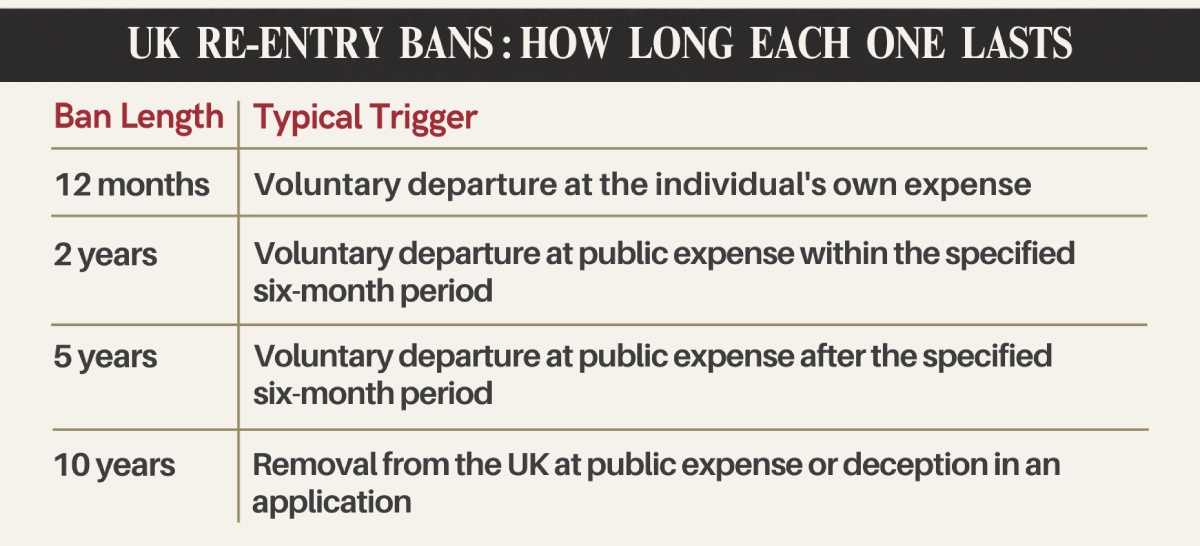
The relevant starting date depends on the circumstances. Where deception was used in an application, the period generally runs from the date of the refusal decision.
Importantly, mandatory refusal periods do not apply to every immigration route, and the applicable rules must be considered in each case. If a refusal or removal decision appears legally flawed, the available options for challenging it will depend on the circumstances and may include an appeal, administrative review or judicial review.
Why UK visit visas get refused
Most UK visit visa refusals do not involve re-entry bans. Instead, they arise because the applicant has not satisfied the requirements of the Immigration Rules, particularly the genuine visitor requirement.
- Doubts about genuine intent, usually tied to insufficient evidence of financial circumstances, ties to your home country, or the purpose of the visit
- Previous immigration breaches, such as overstaying or working in breach of visa conditions
- Deception or false representation in the application or supporting documents
- Certain criminal convictions above certain thresholds
- Missing identity documents or failure to provide require biometrics may result in an application being rejected as invalid or refused, depending on the circumstances.
Of these issues, a central consideration is whether the applicant has demonstrated that they are a genuine visitor. The Home Office must be satisfied that the applicant intends to leave the UK at the end of their visit, is travelling for a permitted purpose and can cover the reasonable costs of their stay.
A well-prepared application should therefore provide clear, consistent evidence of the applicant’s circumstances, travel plans and financial position. Simply stating an intention to return home is not enough; the supporting evidence must substantiate it.
Can you appeal a visit visa refusal?
In most cases, no. There is generally no right of appeal against a standard UK visit visa refusal.
There are limited exceptions. However, in other cases, it may be possible to challenge the decision through judicial review if there are grounds to argue that it was unlawful.
For most applicants, the practical option is to submit a fresh application that directly addresses the reasons for refusal and provides stronger supporting evidence to resolve the underlying issue.
1. Read the refusal letter line by line
2. Strengthen the evidence, not just the explanation
3. Address any inconsistency directly
4. Never cover a problem with false information
How ZH Law can help
We advise applicants across London and Leicester on visit visa applications and refusals, reviewing the refusal letter against your circumstances and advising on the strongest way to approach a fresh application. Where a re-entry ban or a flawed decision is involved, we advise on whether any challenge may be available.
Mr. Zainul Jafferji has over 27 years of experience in immigration, public law and human rights. As a direct access barrister practice, we can advise you without the need to instruct a solicitor first.
Frequently Asked Questions
Is there a waiting period to reapply after a visit visa refusal?
Does a refusal stay on my record?
What is a re-entry ban?
Can I appeal a visit visa refusal?
Refused a visit visa and unsure what to do next?
Speak to Us Today.
London: 0203 887 7306 | Leicester: 0116 365 6400 | enquiries@zh-law.co.uk