
A right to work check is one of the simplest steps in the recruitment process. It is also one of the most expensive to get wrong
For many employers, checking a new employee’s right to work can feel like an administrative formality: obtain the relevant documents or share code, carry out the check and keep a record. But the consequences of getting that process wrong can be substantial. An employer found to have employed someone without the right to work in the UK can face a civil penalty of up to £60,000 for a single worker. Where several workers are involved, the potential liability can multiply quickly.
The important point is that the right to work check itself is generally straightforward. When the prescribed check is carried out correctly and at the right time, an employer can establish a statutory excuse against liability for a civil penalty if the worker is subsequently found to have been working illegally. The difficulty usually lies not in the complexity of the rules, but in the small procedural steps that are overlooked.
What is a right to work check?
A right to work check is the process by which an employer verifies that a prospective employee is legally permitted to carry out the work in question in the UK. Employers are required to prevent illegal working and should carry out the prescribed check before employment begins.
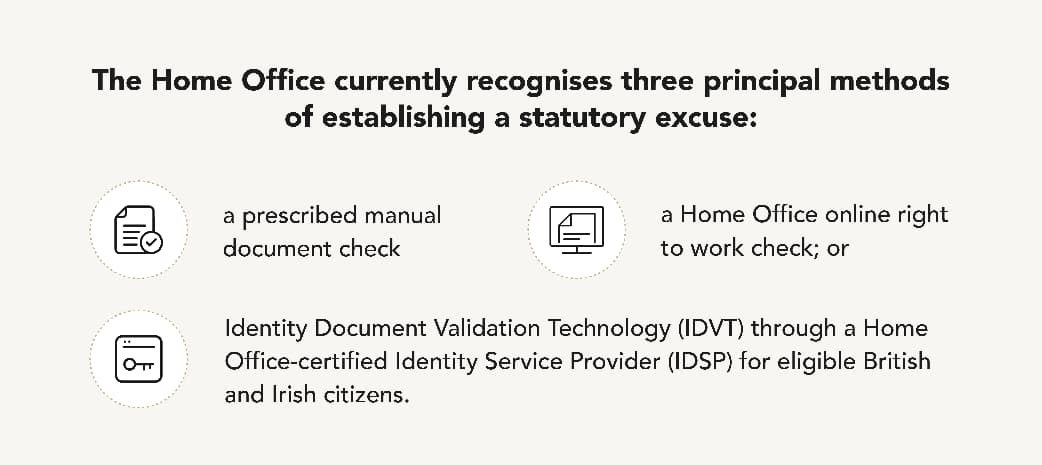
Where the correct check has been completed, the employer may establish what is known as a statutory excuse. This protects the employer against civil penalty liability if the employee is subsequently found not to have the right to undertake that work, provided the requirements of the statutory scheme have been satisfied. The Home Office currently recognises three principal methods of establishing a statutory excuse:
- a prescribed manual document check;
- a Home Office online right to work check; or
- for eligible British and Irish citizens, a check using an approved digital verification service.
How much is the civil penalty for employing an illegal worker?
The financial consequences are significant. Under the Code of Practice in force since 13 February 2024, the starting penalty is:
- £45,000 per illegal worker for a first breach; and
- £60,000 per illegal worker for a repeat breach within three years.
The penalty is calculated per worker, rather than per business. Accordingly, if an enforcement visit identifies several employees who are working illegally and for whom the employer cannot establish a statutory excuse, the potential exposure can become substantial. Importantly, deliberate wrongdoing is not necessary before a civil penalty can arise. An employer may believe that a worker was entitled to work but nevertheless be exposed to a penalty if the worker was employed illegally and the employer cannot establish the prescribed statutory excuse.
That is why proper record-keeping and compliance with the prescribed checking process matter.
What does a correct right to work check involve?
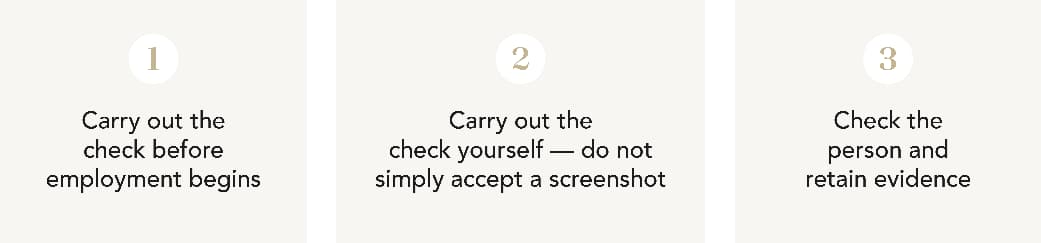
1. Carry out the check before employment begins
Timing matters. To establish a statutory excuse from the commencement of employment, the prescribed right to work check should be completed before the employee starts work.
An employer should therefore build the check into its onboarding process rather than leaving it until the employee’s first week or until payroll documents are being completed. A check carried out later will not retrospectively create a statutory excuse for an earlier period during which the employee was already working.
2. Carry out the check yourself, do not simply accept a screenshot
Where an employee uses the Home Office’s online service, they will usually provide the employer with a right to work share code together with their date of birth.
The employer must then access the official GOV.UK employer checking service and conduct the check.
Simply looking at a screenshot, PDF or other information generated by the employee is not sufficient to establish the statutory excuse. The Home Office expressly requires the employer to access the employer-facing service itself. The employer should also check what the online result actually says.
It is not enough merely to establish that the person has immigration permission: the employer must ensure that the individual is permitted to undertake the particular work being offered, including any restrictions on hours or type of employment.
3. Check the person and retain evidence
The employer must satisfy itself that the individual shown on the online check is the person presenting themselves for work. In practical terms, this means checking that the photograph displayed on the Home Office system corresponds with the employee. This can be done with the individual physically present or by live video call.
The employer should then retain evidence of the online check securely for the entire duration of employment and two years after the employment ends.
Where an employee has a time-limited right to work, the employer should also identify whether and when a follow-up check will be required. For certain employees, additional requirements may apply. For example, where a student has restricted working hours during term time, employers should obtain and retain evidence of the relevant academic term and vacation dates.
What about British and Irish citizens?
British and Irish citizens also need to have their right to work verified. They cannot ordinarily generate a Home Office right to work share code. Instead, employers will usually establish the statutory excuse by carrying out the prescribed check of an acceptable original document such as a British or Irish passport, or, where appropriate, by using an approved digital verification service.
This is important from both a compliance and discrimination perspective. Employers should have a consistent right to work checking procedure for prospective employees rather than making assumptions about somebody’s immigration status based upon their name, accent, appearance or perceived nationality.
What if the employee cannot generate a share code?
An inability to generate a shared code does not necessarily mean that the person has no right to work. There are circumstances in which an employer may need to use the Home Office Employer Checking Service, including where an individual has an outstanding immigration application, appeal or administrative review, or where their status cannot otherwise be verified through the normal online or document-checking process.
Where appropriate, a Positive Verification Notice obtained from the Employer Checking Service can provide a time-limited statutory excuse. Employers should therefore be careful before either allowing someone to commence work without completing the appropriate process or, conversely, concluding that somebody cannot lawfully work simply because a shared code is unavailable.
Why right to work compliance matters beyond the fine
For employers who hold a sponsor licence, the consequences of illegal working can extend far beyond the financial penalty. The Home Office may treat the employment of illegal workers as a serious sponsor compliance issue. Current sponsor guidance provides for enforcement action including the downgrading, suspension or revocation of a sponsor licence.
A civil penalty can therefore threaten not only the immediate finances of the business but also its ability to recruit and continue employing sponsored workers. For a business dependent upon overseas recruitment, the consequences of losing a sponsor licence can be considerably greater than the amount of the civil penalty itself. Right to work compliance should therefore be treated as part of a business’s wider immigration compliance framework, rather than simply as an HR onboarding exercise.
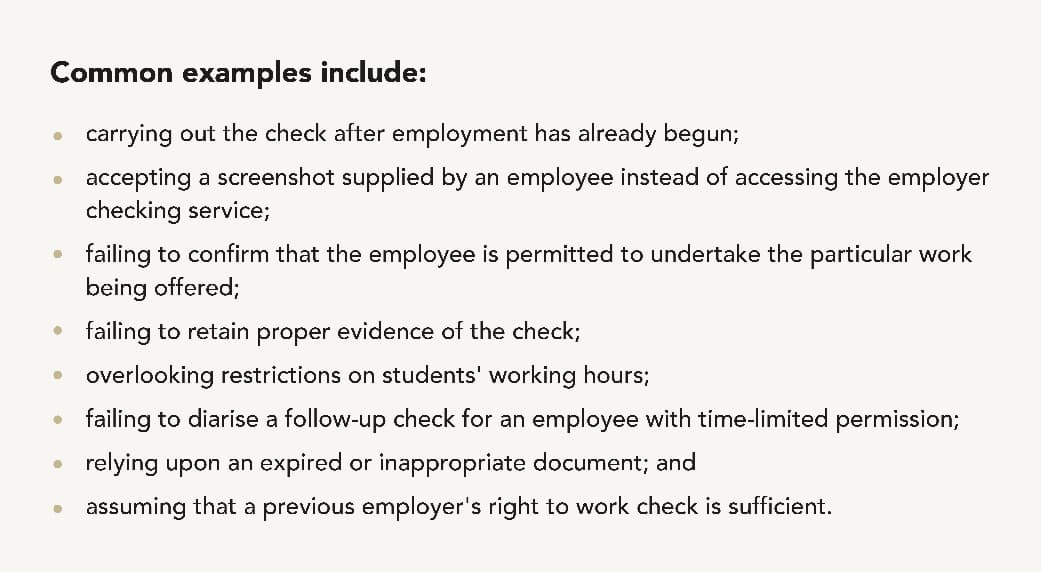
Common right to work mistakes
How ZH Law can help
ZH Law advises employers on all aspects of right to work compliance and illegal working civil penalties. We can assist businesses with:
- auditing existing right to work records and procedures;
- identifying compliance gaps before Home Office enforcement action occurs;
- advising on difficult or unusual right to work cases;
- preparing businesses for Home Office compliance visits;
- advising sponsor licence holders on their wider compliance obligations; and
- challenging civil penalties where a penalty has already been issued.
For sponsor licence holders, we also advise on the potential implications of compliance concerns for the licence itself, including the risk of suspension or revocation and the effect upon sponsored Skilled Workers.
The best time to identify a right to work problem is before the Home Office does. A short compliance check at the beginning of employment can prevent considerably more difficult and expensive problems later.
Frequently Asked Questions
How much is the civil penalty for employing an illegal worker?
The starting penalty is up to £45,000 per illegal worker for a first breach and £60,000 per illegal worker for a repeat breach within three years. The amount ultimately imposed may depend upon the circumstances of the case and the application of any relevant mitigating factors.
Does a right to work check protect me if the worker has misrepresented their immigration status?
A correctly conducted prescribed check can establish a statutory excuse against a civil penalty. Whether a statutory excuse exists will depend upon the type of check undertaken, when it was conducted and whether all of the prescribed requirements were satisfied.
Can I accept a screenshot of an employee's online right to work status?
No. Where the Home Office online checking route applies, the employer must conduct the check through the employer-facing GOV.UK service. Simply viewing information or a screenshot supplied by the worker does not establish the statutory excuse.
Do I need to carry out right to work checks for British and Irish citizens?
Yes. Employers should verify the right to work of prospective employees consistently. For British and Irish citizens, the prescribed document-checking process or, where appropriate, an approved digital verification service should instead be used.
How long should I keep evidence of a right to work check?
For the duration of the individual’s employment and for two years after the employment ends.
What happens if an employee has a time-limited visa?
You may need to conduct a follow-up right to work check before the existing statutory excuse expires. Employers should therefore have an effective HR system for monitoring time-limited permissions.
Do I need to carry out right to work checks for British and Irish citizens?
Yes. Employers should verify their employees’ right to work using the prescribed process and retain evidence of the check(s), even if the employee is British or Irish.For further guidance, see our business immigration advice.
Can a civil penalty affect an employer's sponsor licence?
Yes. A civil penalty may trigger further Home Office scrutiny of an employer’s sponsorship arrangements and may result in the revocation or suspension of your sponsor licence. Employers should address compliance concerns promptly and seek advice on sponsor licence revocation where necessary.
Need expert legal advice? We're here to help.
Speak to ZH Law today.
Chat with us through the ZH Law website | WhatsApp us directly
London: 0203 887 7306 | Leicester: 0116 365 6400 | enquiries@zh-law.co.uk